Commercial water & sewer cost reduction
Your water meter bills you for air. We fix that at the meter.
A patented, maintenance-free flow optimization valve installed on your side of the meter. Typical facilities cut billed water and sewer volume 15% to 20%, verified on their own utility bills.
Without the valve, entrained air expands as it reaches the meter. A positive-displacement meter counts that volume as water, and you pay water and sewer rates on it.
How it works
Four ways one valve lowers the bill
No electronics, no power and no change in how your building runs. Pick a mechanism to see what it does.
Savings calculator
What would it save your building?
Every metered gallon is billed twice, once as water and again as sewer, so each gallon you stop paying for saves at both rates. Start with your combined monthly bill.
Installed cost depends on valve size and site conditions. We quote a firm price after the site assessment.
Assumes no utility rate increases, which keeps the estimate conservative. Actual savings vary with occupancy, weather, pressure and meter type.
Field results
Measured on customers' own meters
Reported results from installations across healthcare, hospitality, residential, industrial and restaurant sites. Client names are withheld.
| Facility | Valve | Reduction | Annual savings | Gallons / yr | Payback |
|---|
Results reported from customer utility data. Car wash results are per car washed and the training facility per occupant. A dash means the source did not report that figure. Click a column heading to sort.
From the field
What's actually on your line
Hardware, jobsites and the Alvarez crew. The full photo log has 17 shots.
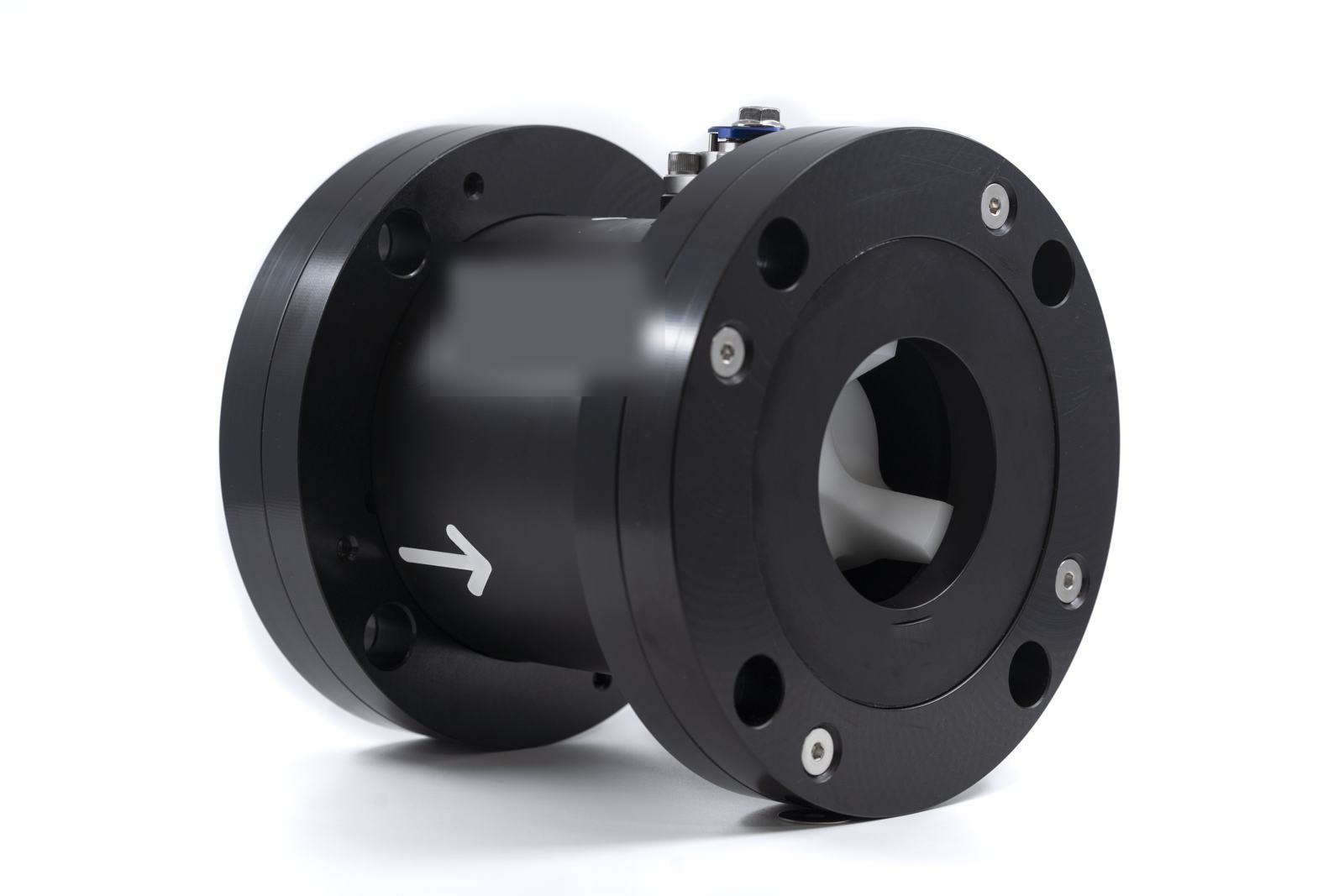
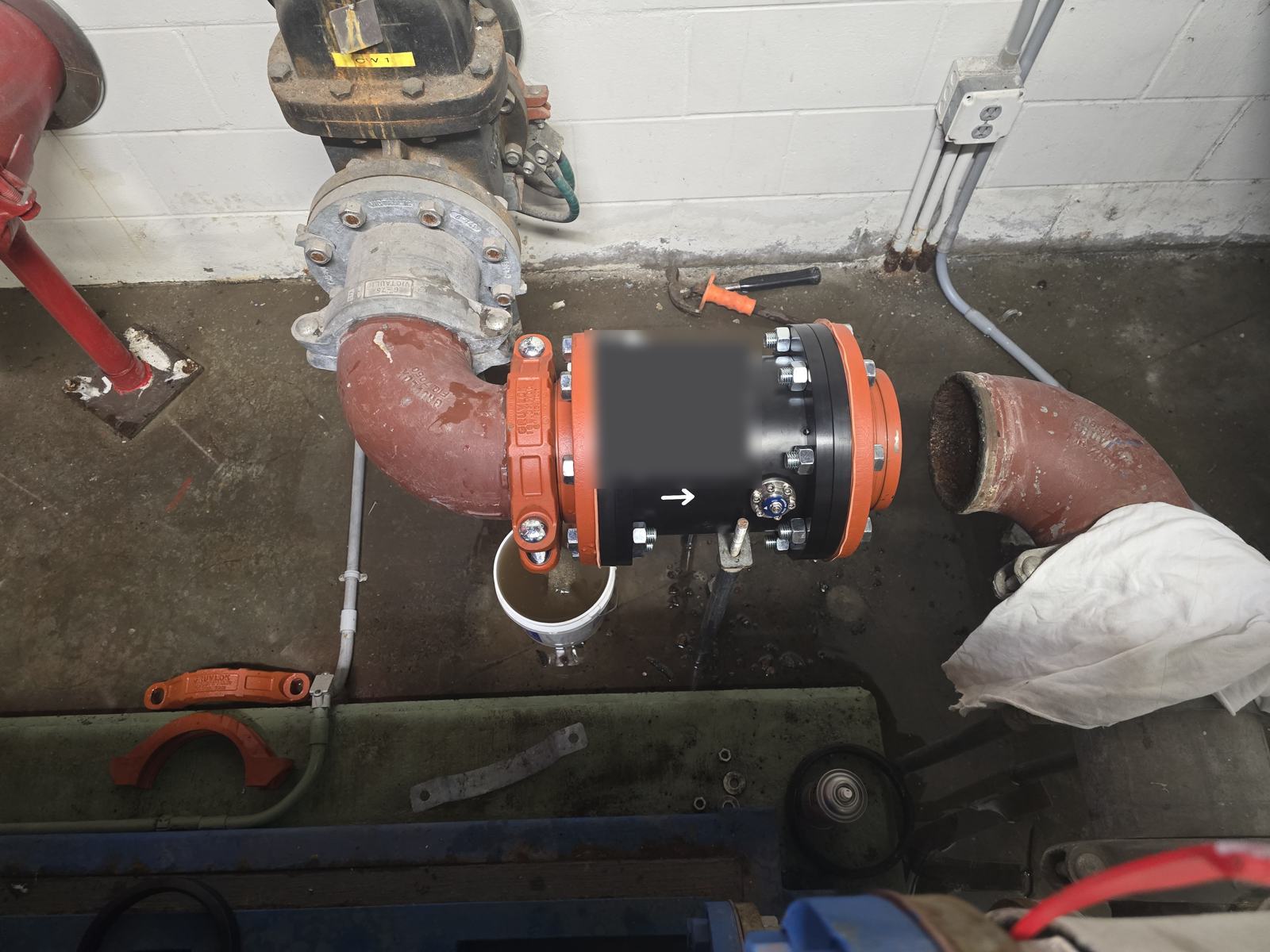
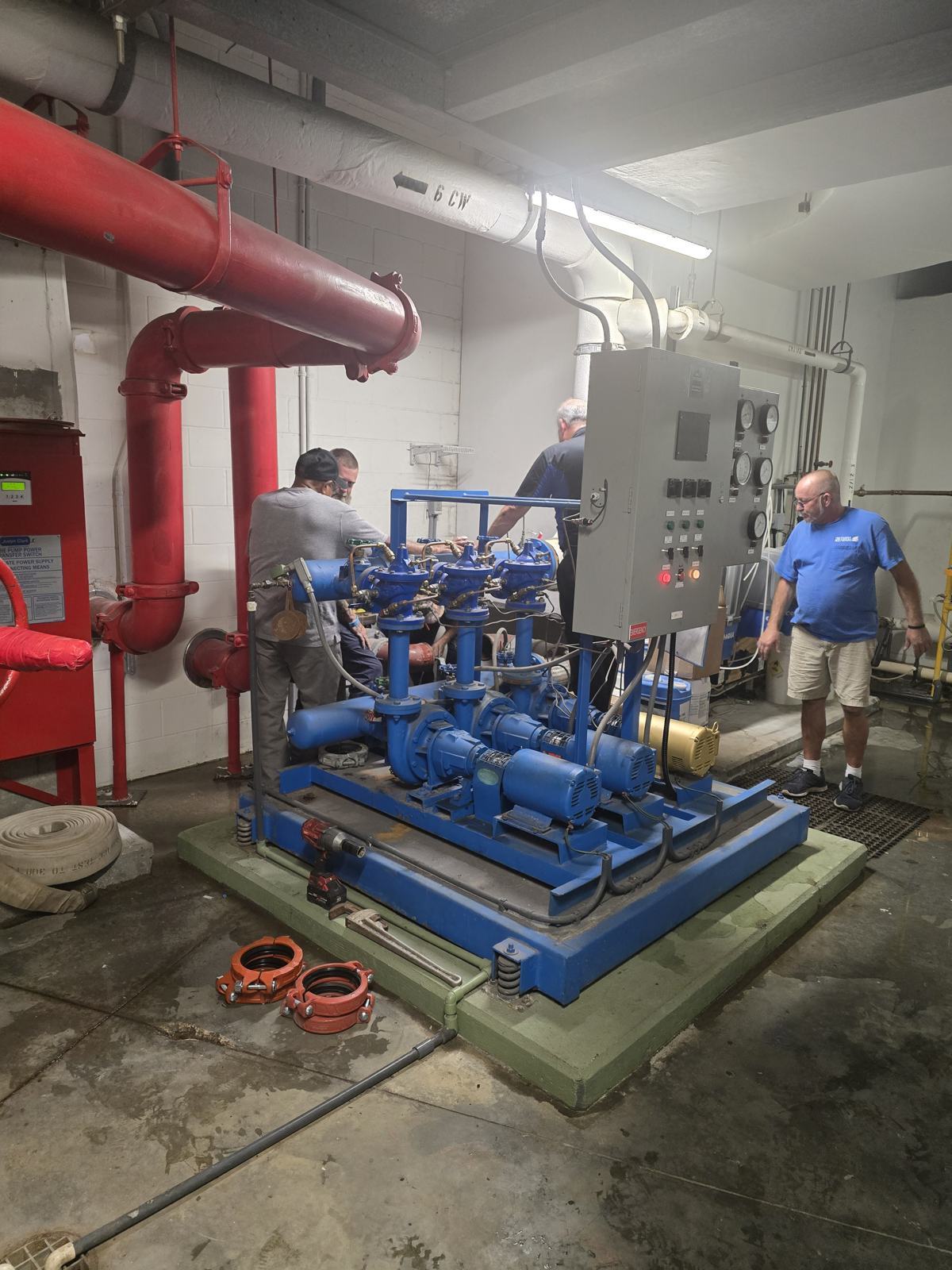
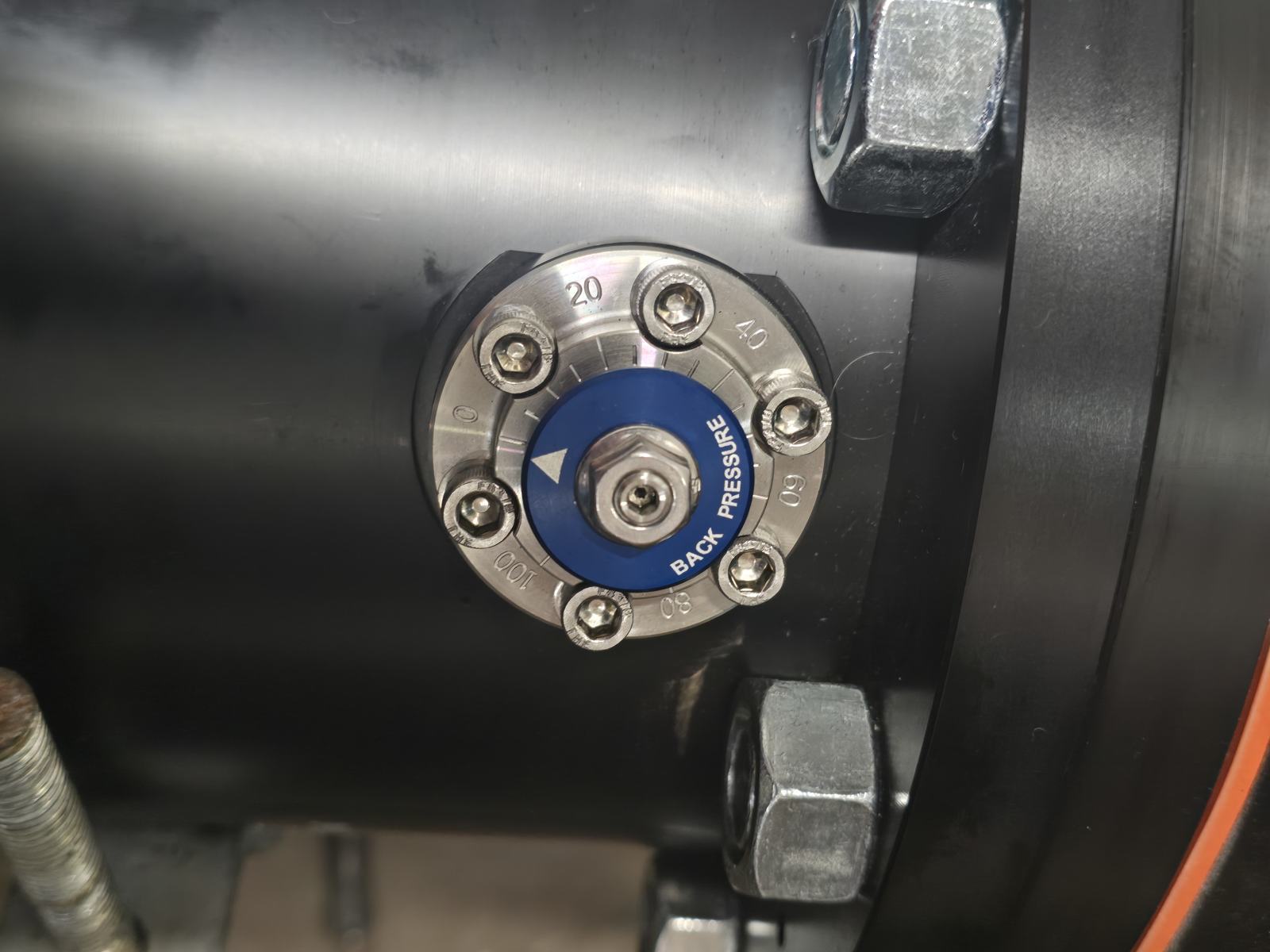
From first call to verified savings
One local team, start to finish
Our licensed commercial plumbers handle the assessment, installation, tuning and reporting. You deal with one accountable contractor.
Assess
Week 1 · about an hour on siteWe survey the meter, line size, pressure and flow profile, and size the valve. No cost.
Baseline
Before installYour last 12 months of bills, plus live monitoring, set the baseline so seasonal swings don't distort results.
Install & tune
Weeks 2–4Off-hours install with a planned shutdown, then the valve is tuned to your building. Occupants notice nothing.
Verify
Days 1–90Post-install bills are checked against the baseline. Not satisfied for any reason? The valve comes out and you're refunded.
Report
OngoingQuarterly savings reports in gallons and dollars for finance, facilities and sustainability reporting.
Two ways to buy
Same valve, same savings. You choose who funds it.
Purchase
Buy the valve installed and keep 100% of the savings from day one. Most commercial sites pay back in months, not years.
- 50% deposit to schedule, balance at commissioning
- Monitoring included the first year
- You own the valve outright
$0 down, shared savings
We fund the valve, installation and monitoring. You split verified savings 50/50 for 24 months, then keep all of it.
- No budget approval cycle
- Payments come only from savings proven on the bill
- We carry the performance risk
Built to be forgotten
Set it, then leave it alone
The only moving part is a spring-loaded, gasket-less plunger in a self-lubricating engineering polymer and stainless steel housing.
Fit check
Is your building a good candidate?
Answer four questions. Buildings with steady, high flow on a single metered service pay back fastest.
“The purchase of your valves has proven to be a very good return on investment. We look forward to installing another in our new building!”
Questions facility managers ask
FAQ
Does the air still go through the meter?
Yes. The valve doesn't remove air. It holds steady pressure upstream through the meter, so entrained air stays compressed and passes in a reduced state instead of being measured as water. After the valve it returns to its normal state.
Will occupants notice lower pressure?
No. Most fixtures are designed for 60 to 65 PSI. The valve is tuned to your building's pressure and flow profile so fixtures still get what they need, and the setting can be adjusted later if demand changes.
How long does installation take, and is there downtime?
Installs on standard line and backflow sizes with minimal downtime, usually scheduled off-hours with a planned shutdown. Where a backflow or main replacement is already planned, we install during the same shutdown.
What maintenance does it need?
None. There are no electronics or consumables. The only movement is the compression of a spring and the opening and closing of a gasket-less plunger, and the valve carries a 10-year manufacturer warranty.
How are savings verified?
Against your own utility bills. We set a 12-month baseline before installation, add live monitoring, and compare post-install bills during a 90-day verification window. If you aren't satisfied for any reason, the valve is removed and the purchase price refunded.
Is it approved for drinking water?
Yes. The valve is certified to NSF/ANSI 61 and NSF/ANSI 372, and it also adds a layer of backflow protection and dampens water hammer.
Technical support library
For engineers, contractors and commissioning agents
Each page has a working calculator or field checklist. Commissioning and troubleshooting pages are for authorized installers and need a password.
Hydraulics & air theory
Boyle's law at the meter, registration error, orifice flow and pressure.
TS-02Install & sizing specification
Location, straight pipe, sizing to 12″, bonding, booster-pump configurations.
TS-03Commissioning & tuning
Dial procedure, peak-demand stepping, acceptance record and sign-off.
TS-04Troubleshooting & M&V
Symptom table, baseline normalization and the savings calculation.
Free site assessment
Send us 12 months of bills. We'll tell you plainly if it pays.
We review your bills, inspect the meter and line, and come back with a valve size, a firm price and a projected payback. If the numbers don't work, we'll say so.
Installed and supported by Alvarez Plumbing & Air Conditioning, Tampa. Third-generation, family-owned and veteran-owned, serving Tampa Bay for 50 years. Licensed, insured and bonded.
Field photos
The hardware, the jobsites and the crew. Tap any photo to enlarge it.
Hydraulics & air theory
Why a positive-displacement meter over-registers, and how holding pressure through the meter reduces it.
1. Entrained air in municipal supply
Distribution water carries dissolved and entrained air from pumping, main breaks, flushing and tank turnover. A positive-displacement or multi-jet meter measures volume swept, not mass of water. Any free air in the chamber turns the register exactly as water would, and the account is billed for it at the water rate and again at the sewer rate.
2. Boyle's law at the meter
Free air follows Boyle's law using absolute pressure. When building demand draws pressure at the meter down from static, each air pocket expands, and the meter counts the expanded volume.
The valve sits downstream of the meter and resists flow, which holds the meter chamber close to static. Air passes the register compressed, then expands harmlessly downstream of the valve.
Air component only. Field reductions also include meter-accuracy and pressure-trim effects (sections 3 and 4).
3. Meter accuracy band
AWWA C700 positive-displacement meters are specified to register within roughly 98.5% to 101.5% across their normal flow range and lose accuracy at very low flows. Pressure surges, fast-closing valves and flow transients drive the register outside that band, typically toward over-registration when air is present. Damping the transient keeps the meter in its accurate range.
4. Orifice flow and fixture pressure
Flow through an open fixture behaves like flow through an orifice: it scales with the square root of pressure.
Applies to time-based uses (showers, hose bibbs, rinse lines). Volume-based uses (toilet tanks, fill cycles) see no change in volume.
5. What the valve does not do
- It does not remove air. Air passes through and re-expands downstream.
- It does not reduce consumption where a VFD booster restores the setpoint downstream; savings there come mainly from meter registration.
- It is not a pressure-reducing valve. It manages pressure upstream toward the meter, with a controlled drop downstream.
Install & sizing specification
For licensed plumbing contractors and mechanical engineers. Installation is not complete until the valve is leak-tested, calibrated under demand, documented, photographed and accepted by the owner.
1. Location
Owner side of the meter, immediately after the backflow preventer where present, and before any PRV, booster pump, storage tank or other water equipment. Locate for access to the adjustment dial and future service.
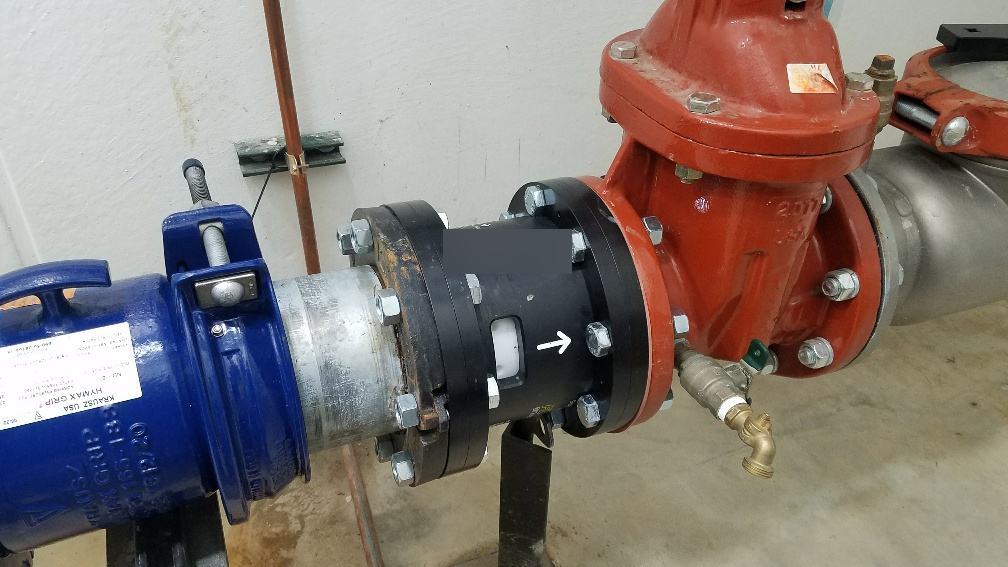
6″ flanged install between a restrained coupling and the isolation valve, auto paint plant.
2. Straight pipe
Target ten pipe diameters upstream and downstream (a 2″ valve wants 20″ each side). It is recommended, not critical. If space forces a choice, keep more straight pipe upstream.
3. Sizing and connections
| Line size | Connection | Straight pipe target, each side | Typical application |
|---|---|---|---|
| ¾″–1½″ | Threaded | 7.5″–15″ | Restaurants, small retail, sterilizer branch lines |
| 2″ | Threaded or flanged | 20″ | Quick-service restaurants, car washes, fitness |
| 3″–4″ | Flanged | 30″–40″ | Apartments, laundries, mid-size hotels |
| 6″–8″ | Flanged | 60″–80″ | Hospitals, high-rises, campuses, plants |
| 10″–12″ | Flanged | 100″–120″ | Large campuses, plants, district mains |
Match the valve to the service line size. Body length varies by size; set flange spacing from the cut sheet plus gasket thickness.
4. Installation sequence
| # | Field action | Acceptance standard |
|---|
5. Booster pump and tank configurations
| Condition | Calibration posture | Risk control |
|---|---|---|
| No booster pump | Meter savings plus end-use conservation | Watch top-floor and remote fixture pressure |
| Constant-speed booster | Moderate setting reduces end-use pressure | Avoid pump inlet starvation and cavitation |
| VFD booster | Savings mainly from meter accuracy | Monitor pump speed, amps, alarms, setpoint |
| House or open tank | Savings at the meter; limited end-use effect | Do not overstate conservation |
| Critical process water | Conservative setting | Verify sterilizers, cooling towers, lab and patient-care fixtures |
6. Required photo record
- Before: meter, backflow, pipe run, valve location, pump and PRV equipment.
- During: cut-in, flanges, gaskets and bolts, bonding jumper, flow arrow.
- After: installed valve, gauge readings, dial setting, dry joints.
Commissioning & tuning
TS-03 · dial procedure, tuning log, acceptance checklist and commissioning record. For authorized installers and commissioning agents.
Need access? Call (813) 655-7520.
Troubleshooting & M&V
TS-04 · symptom table, baseline normalization and the verification calculator. For authorized installers and commissioning agents.
Need access? Call (813) 655-7520.